
Seed Quality & Germination Research Applications
Seed quality and germination performance are critical factors determining the success of breeding programs, research experiments, and large-scale crop production. These evaluations are traditionally conducted in seed germination chambers, where temperature, humidity, and light conditions are precisely controlled to assess seed viability, vigor, and early-stage growth behavior. Our walk-in seed germination rooms provide the same chamber-level control with greater capacity and flexibility for large sample volumes.
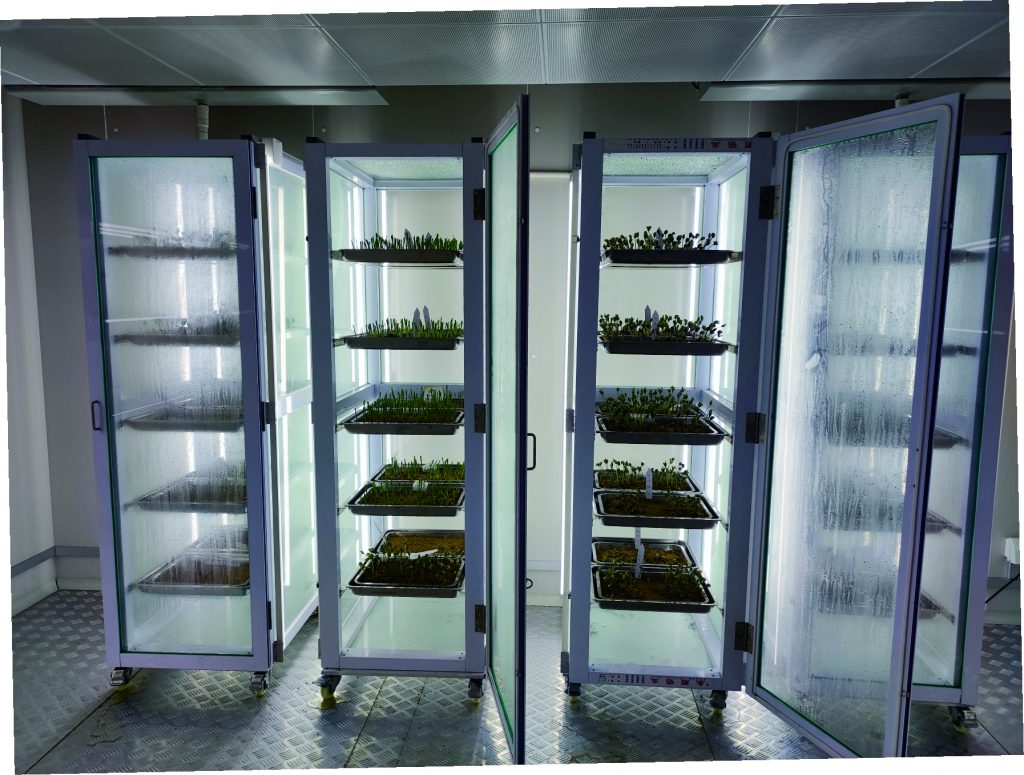
Why Controlled Germination Research Is Essential
Seed performance is highly sensitive to temperature, moisture, light, and oxygen availability. Small environmental fluctuations can significantly affect germination rate and early seedling development, leading to inconsistent or misleading results.
Controlled germination research environments enable researchers and seed professionals to:
1. Accurately assess seed viability and germination percentage
2. Compare seed lots or treatments under identical conditions
3. Identify early-stage growth differences linked to genetics or handling
4. Reduce experimental noise caused by external environmental variation
This level of control is essential for making reliable decisions before advancing to breeding or production stages.
How Seed Quality and Germination Research Is Conducted
Seed quality and germination research is typically performed using standardized protocols under precisely controlled environmental conditions. Seeds are exposed to defined temperature, humidity, and light regimes while germination behavior and early growth parameters are recorded.
Controlled environments ensure that observed differences in germination speed, uniformity, and seedling vigor reflect intrinsic seed quality rather than uncontrolled external factors.
Typical Research and Testing Scenarios
Seed quality and germination research is widely applied in:
Seed viability and vigor testing for breeding programs
Comparative evaluation of different seed lots or storage conditions
Assessment of treatment effects such as priming or coating
Early-stage screening of breeding populations
Quality control testing prior to nursery or field deployment
These applications support both research-driven and production-oriented decision-making.
Some Details
Environmental Conditions Commonly Controlled
Effective germination research environments typically regulate:
- Temperature and temperature stability
- Relative humidity and moisture availability
- Light exposure and photoperiod (when required)
- Air circulation and oxygen availability
Precise control of these parameters ensures consistent germination conditions across tests and over time.
Facilities Commonly Used
Seed quality and germination research applications are commonly implemented using:
- Seed Germination Rooms or Growth Chambers
- Walk-In Plant Growth Rooms configured for early-stage research
Facility selection depends on sample throughput, experimental duration, and the level of environmental precision required.
From Seed Evaluation to Production Decisions
Reliable seed quality and germination data form the foundation for downstream breeding and production activities. By conducting evaluations in controlled environments, researchers and producers can confidently advance high-performing seed material into speed breeding, nursery propagation, or field trials.
Well-designed germination research facilities help reduce risk, improve consistency, and support efficient progression from seed evaluation to large-scale cultivation.