
Nursery & Seedling Production Systems
Nursery and seedling production systems under controlled environments are designed to produce uniform, healthy, and predictable seedlings at scale. These systems eliminate environmental variability during early plant development, ensuring that large batches of seedlings grow consistently and are ready for downstream cultivation or transplantation.
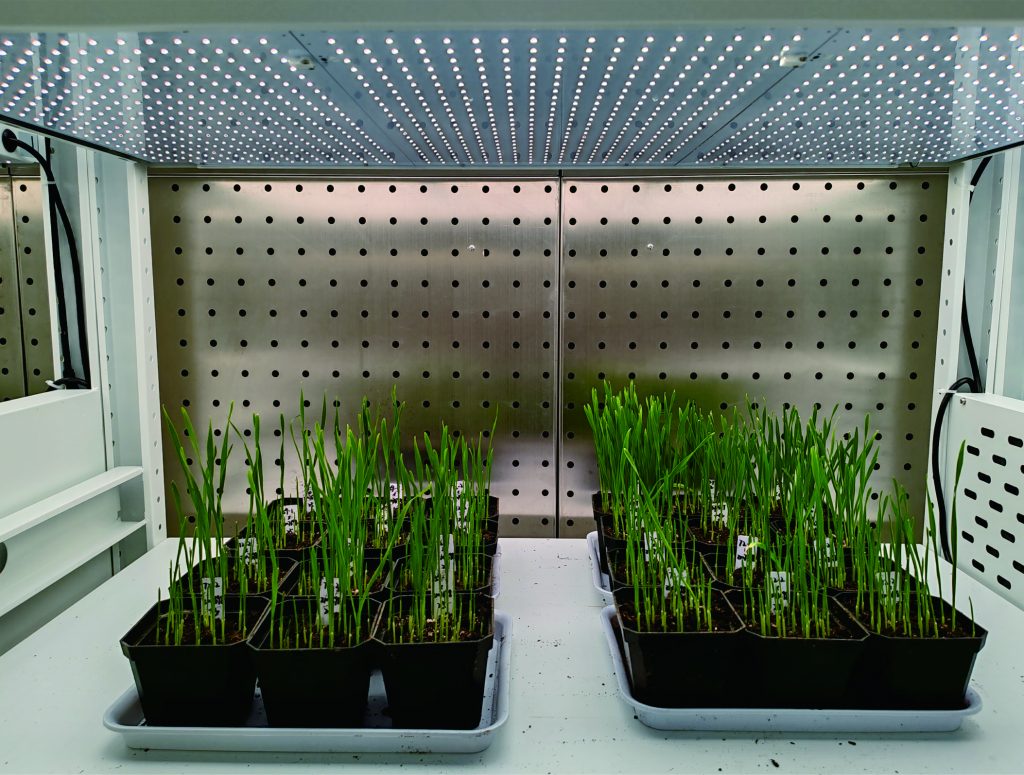
Why Controlled Nursery Production Is Essential
Early-stage plant growth is highly sensitive to fluctuations in temperature, humidity, light, and airflow. In traditional nursery conditions, these variations often lead to uneven germination, inconsistent seedling size, and higher disease risk.
Controlled nursery systems allow producers and researchers to:
1. Achieve high uniformity across large seedling batches
2. Reduce disease incidence during vulnerable growth stages
3. Shorten the seedling production cycle
4. Improve predictability for transplantation and further cultivation
This level of control is essential for both research-driven propagation and commercial-scale seedling supply.
How Seedling Production Is Conducted in Controlled Environments
Seedling production in controlled environments follows standardized environmental protocols that ensure consistent conditions for all trays or batches. Environmental parameters are programmed to support optimal germination, early root development, and balanced shoot growth.
By maintaining stable conditions across the entire nursery space, differences in seedling performance are minimized, resulting in uniform growth and higher survival rates after transplantation.
Typical Research and Testing Scenarios
Controlled environment nursery systems are widely used in:
Commercial seedling production for greenhouse or field cultivation
Preparation of uniform plant material for research experiments
Support of speed breeding and breeding program expansion
Disease-sensitive crop propagation requiring strict environmental control
Vertical farming and plant factory pre-cultivation stages
These scenarios require both consistency and throughput, which traditional nurseries often struggle to provide.
Some Details
Environmental Conditions Commonly Controlled
Effective nursery and seedling production systems typically regulate:
- Stable temperature for rapid and even early growth
- Relative humidity to prevent dehydration or fungal issues
- Light intensity and photoperiod for balanced development
- Air circulation to maintain uniform conditions across trays
Such environmental stability ensures predictable seedling quality regardless of external climate.
Facilities Commonly Used
Nursery and seedling production systems are commonly implemented using:
- Seedling Nursery Growth Rooms designed for tray-based, high-density cultivation
These facilities provide sufficient space, environmental uniformity, and scalability for batch production.
From Uniform Seedlings to Reliable Production
Uniform seedlings are the foundation of reliable agricultural production. By producing seedlings in controlled nursery environments, growers and researchers can ensure consistent plant material enters greenhouses, fields, or plant factories—reducing variability and improving overall production efficiency.
Well-designed nursery systems enable smooth transition from seed evaluation and breeding programs to large-scale cultivation with minimal risk and maximum predictability.