
Insect Rearing & Entomology Studies
Insect rearing and entomology studies in controlled environments provide stable conditions for maintaining insect populations and conducting detailed research on their life cycles, behavior, and interactions with plants.
By eliminating environmental variability, researchers can ensure that insect development, reproduction, and activity are consistent and suitable for repeatable experimental work.
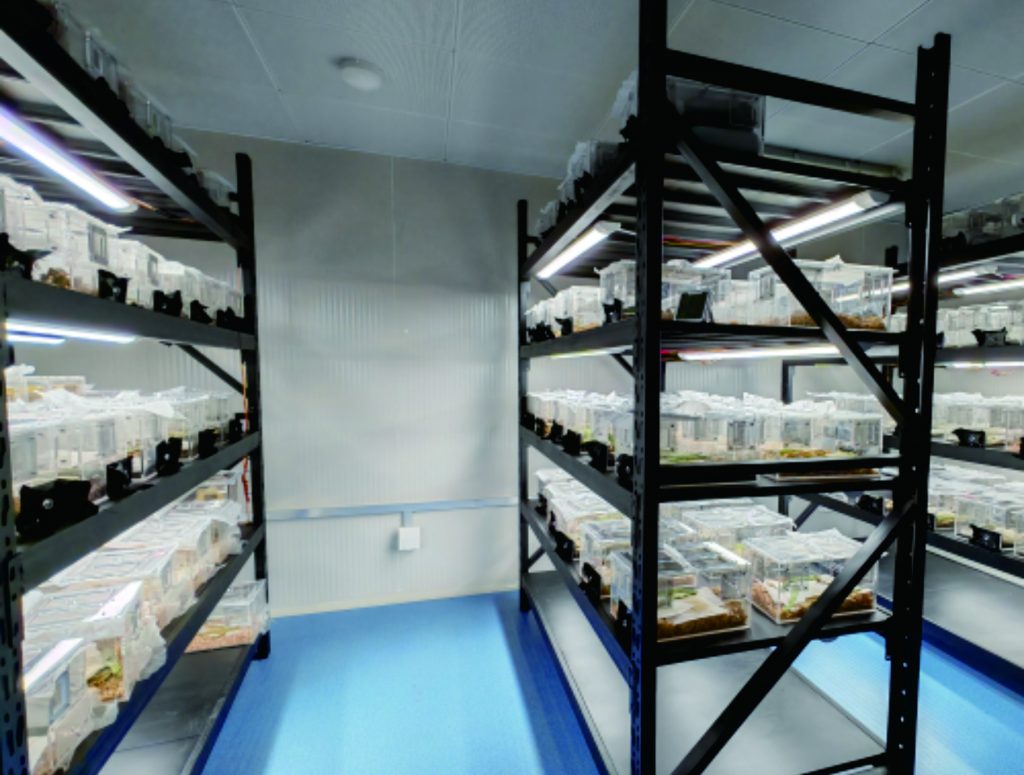
Why Controlled Insect Rearing Is Essential
Insect growth and behavior are highly sensitive to temperature, humidity, light, and airflow. Even small environmental fluctuations can alter development rates, feeding behavior, and reproduction cycles, making experimental results unreliable.
Controlled insect rearing facilities allow researchers to:
1. Maintain stable insect colonies over long periods
2. Ensure consistent life cycle timing for experiments
3. Study insect behavior under repeatable conditions
4. Conduct plant–insect interaction research with minimal environmental interference
This level of stability is essential for accurate entomology studies.
How Insect Rearing and Experiments Are Conducted
Insect populations are maintained in isolated environments where temperature, humidity, and light conditions are precisely regulated. These parameters are adjusted according to the biological requirements of specific insect species to ensure normal development and predictable behavior.
Such controlled conditions allow researchers to conduct experiments involving feeding, reproduction, infestation, and interaction with plant material.
Typical Research Scenarios
Controlled insect rearing facilities are widely used for:
Life cycle and developmental stage studies
Pest behavior and feeding pattern analysis
Plant–insect interaction research for crop protection studies
Evaluation of pest resistance in plant breeding programs
Testing effectiveness of pest control methods
These scenarios require both environmental precision and biological containment.
Some Details
Environmental Conditions Commonly Controlled
Effective insect rearing environments typically regulate:
- Stable temperature ranges suited to insect development
- Relative humidity for survival and reproduction
- Light intensity and photoperiod for behavioral regulation
- Air circulation to maintain uniform conditions
Such environmental control ensures predictable insect activity and development.
Facilities Commonly Used
Insect rearing and entomology studies are commonly implemented using:
- Insect Rearing & Entomology Rooms designed for isolation and environmental precision
These facilities provide the containment and stability necessary for long-term insect maintenance and experimentation.
From Insect Studies to Crop Protection Strategies
Reliable insect research data supports the development of pest-resistant crops, improved pest management strategies, and deeper understanding of plant–insect interactions. Controlled environment insect rearing facilities ensure that entomology research is consistent, safe, and scientifically valid.
Well-designed insect rearing rooms enable researchers to conduct complex entomological studies with accuracy and repeatability.