
Controlled Environment Research Applications
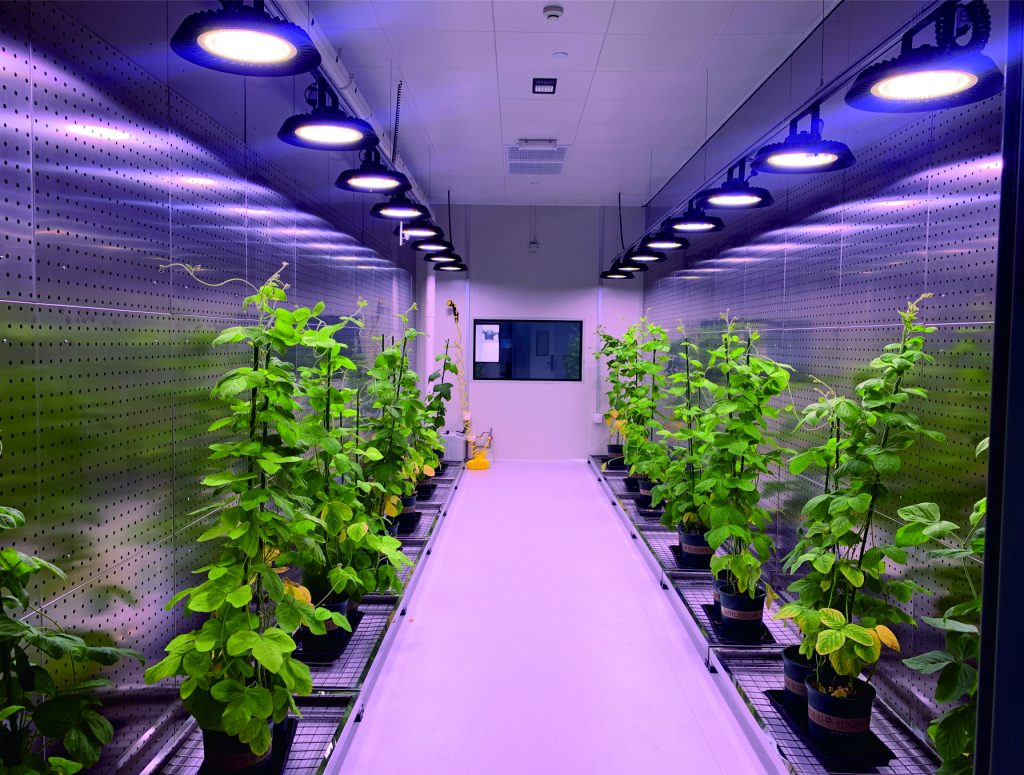
Plant research often requires experimental conditions that are precisely defined, repeatable, and isolated from external variability. Such studies are traditionally conducted in plant growth chambers for research, where temperature, humidity, light, and CO₂ can be accurately controlled. Our walk-in plant growth rooms provide the same chamber-level precision while offering the space and scalability required for larger experimental setups and high-throughput studies.
Why Controlled Environments Matter in Plant Research
Many plant experiments cannot be reliably conducted in open fields or conventional greenhouses due to fluctuating temperature, light, humidity, and uncontrollable biological interference.
Controlled environment research systems allow researchers to:
1. Maintain stable and repeatable growth conditions across experiments
2. Isolate single environmental factors while keeping others constant
3. Simulate specific climates or stress conditions on demand
4. Improve experimental reproducibility and data comparability
This level of control is essential for publishing high-quality research results and for long-term experimental programs.
Typical Research Scenarios
Controlled environment research applications are commonly used for:
Each scenario places different demands on environmental accuracy, spatial layout, and experimental repeatability.
Plant physiology studies
including photosynthesis, respiration, and growth regulation
Environmental response experiments
such as temperature, light intensity, photoperiod, and humidity effects
Abiotic stress research
including drought, salinity, cold, heat, and nutrient stress
Seed germination and early growth experiments
requiring uniform and stable conditions
Vernalization and cold treatment studies
where precise temperature cycles are essential

Some Details
Environmental Parameters Commonly Controlled
Depending on research objectives, controlled environment systems may regulate:
- Temperature and temperature gradients
- Relative humidity
- Light intensity, spectrum, and photoperiod
- CO₂ concentration and air circulation
- Nutrient and irrigation conditions
The ability to independently control and log these parameters is critical for both experimental design and data analysis.
Typical Facilities Used
Controlled environment research applications are typically implemented using:
- Controlled Environment Climate Rooms
- Walk-In Plant Growth Rooms
- Seed Germination Rooms or Growth Chambers
- Vernalization and Cold Treatment Rooms
- Stress Simulation Research Rooms
Facility configurations are often customized to support specific research protocols, crop types, and experimental scales.
From Research Objectives to Facility Design
Effective controlled environment research begins with clear experimental objectives. Translating those objectives into a suitable facility requires aligning environmental precision, system stability, and operational flexibility.
By starting from the research application itself, we can design controlled environment facilities that support long-term experimentation, reproducible results, and future research expansion.