
Commercial Vertical Farming & Plant Factories
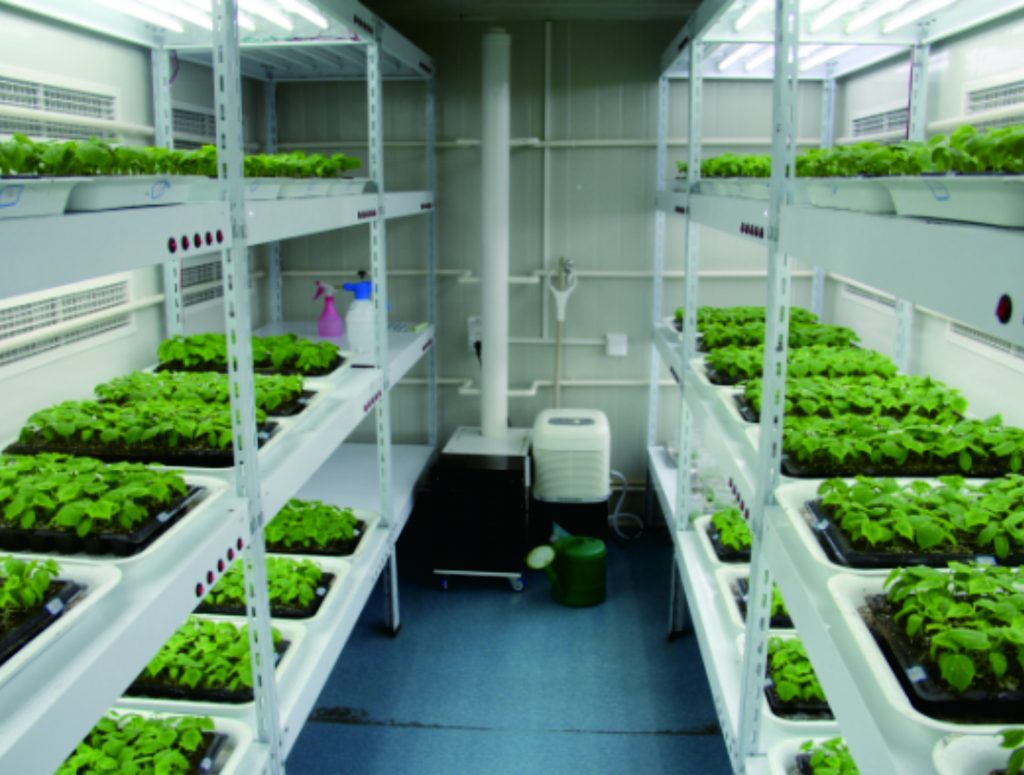
Commercial vertical farming and plant factory systems enable continuous indoor crop production under fully controlled environmental conditions. By eliminating dependence on external climate, these systems provide stable yields, efficient space utilization, and predictable production cycles throughout the year.
Controlled environment plant factories are designed for reliable, high-density cultivation in urban, commercial, and strategic food production scenarios.
Why Controlled Indoor Production Is Essential
Traditional agriculture and greenhouse production are heavily influenced by seasonal changes, weather variability, and land availability. These factors lead to fluctuations in yield, quality, and supply reliability.
Indoor vertical farming systems allow operators to:
1. Produce crops year-round regardless of climate
2. Maximize output per square meter through vertical space use
3. Reduce water consumption and minimize pesticide use
4. Achieve consistent crop quality and predictable harvest cycles
This level of control is essential for commercial-scale indoor agriculture.
How Vertical Farming and Plant Factory Production Is Conducted
Crops are cultivated in multi-layer growing systems under programmable control of temperature, humidity, light spectrum, photoperiod, and CO₂ levels. Environmental parameters are optimized for specific crop types to promote rapid, uniform growth.
Because all conditions are regulated, production cycles can be accurately planned and repeated, enabling stable scheduling and supply.
Typical Production Scenarios
Commercial vertical farming and plant factories are widely used for:
Urban and community food production projects
Commercial leafy greens and herb cultivation
High-value crop production in limited spaces
Government-supported food security demonstration projects
Educational and exhibition centers for modern agriculture
These scenarios require both environmental precision and operational efficiency.
Some Details
Environmental Conditions Commonly Controlled
Effective plant factory systems typically regulate:
- Temperature and humidity for optimal crop growth
- LED light spectrum and photoperiod for photosynthesis control
- CO₂ concentration for yield improvement
- Air circulation and cleanliness for plant health
Such control ensures consistent production performance across cycles.
Facilities Commonly Used
Commercial vertical farming applications are commonly implemented using:
- Indoor Vertical Plant Factory systems for large-scale installations
- Containerized Plant Factory Systems for modular and mobile deployment
These facilities provide scalable solutions for different operational needs.
From Controlled Environment to Predictable Yield
By operating crops inside controlled plant factory systems, producers gain full control over growth conditions, production timing, and output quality. This predictability reduces operational risk and supports reliable commercial supply chains.
Well-designed vertical farming facilities transform indoor agriculture into a stable and repeatable production system.